


For centuries, unexplained lights have appeared in the sky outside the tiny desert town of Marfa, Texas — and to this day, nobody has ever been able to uncover their mystery. No one can predict when the lights will appear, but it’s fewer than 30 times per year. When they do, eyewitnesses report seeing them as greenish and yellowish orbs dancing in the distance.
The Apache people were among the first to describe the mystery lights in folklore tales, believing they were spirits of ancestors returning to earth in the form of fallen stars guiding and protecting their people.
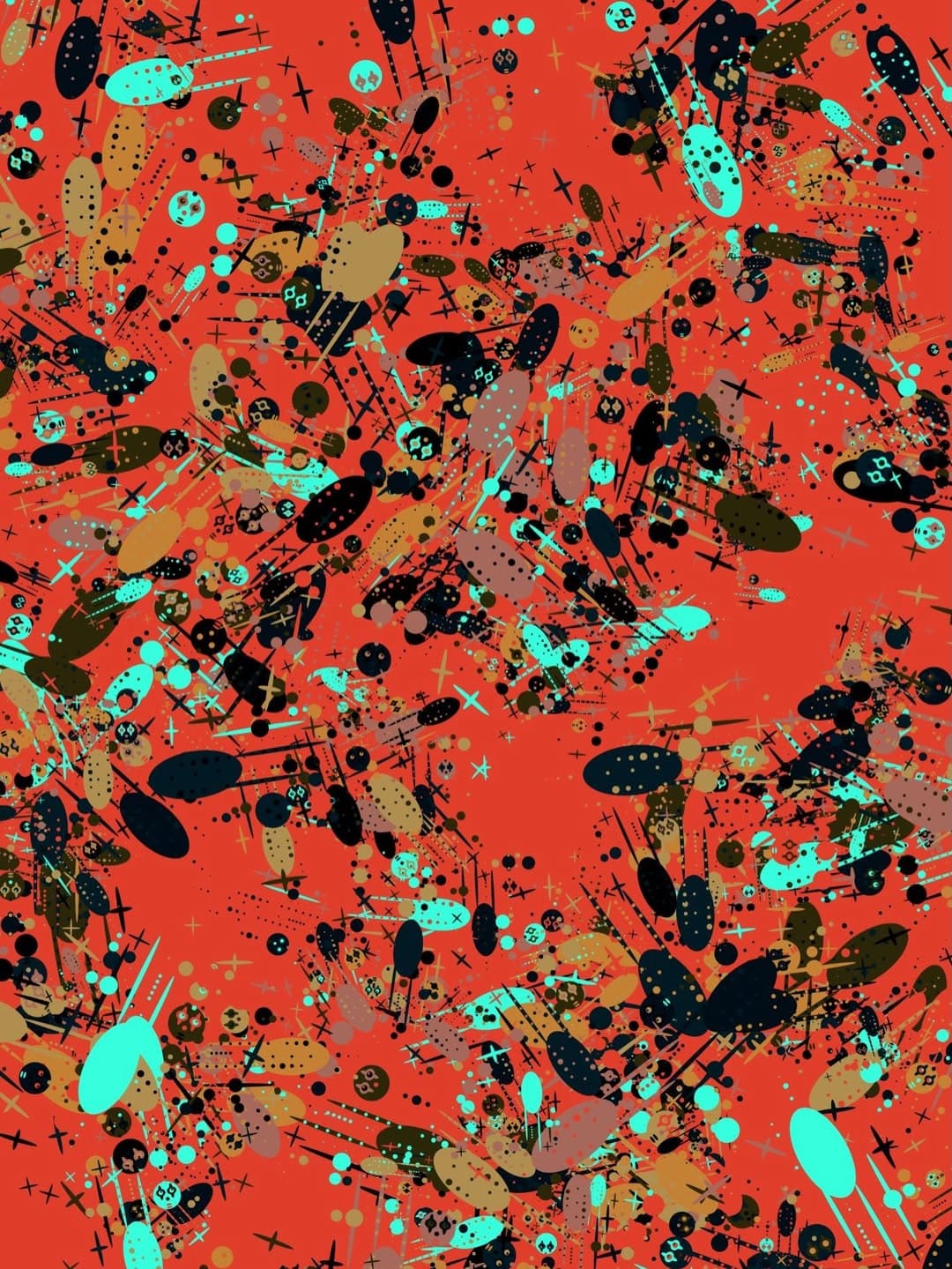
For new media artist Nygilia McClain, who participated in this year’s Art Blocks × OpenSea Artist Residency, a 4-week program embedded in Marfa's creative scene, the mysterious lights and oral histories served as inspiration for her generative art series Starlight.
“When I was walking around town on the first day, I saw a cactus and it had all these specific markings on it that resembled a face,” says Nygilia in a video call with The Overview. “It reminded me of the kodama, forest spirits in Japanese folklore I first learned about watching Studio Ghibli's Princess Mononoke. In Marfa cactuses have all these different shapes and figures and some of them look almost humanlike.”
Marfa: “Tough to get to. Tougher to explain”
Marfa's official slogan is “Tough to get to. Tougher to explain. But once you get here, you get it.” That was also Nygilia's experience. Over 30 days, she wandered the dusty desert roads of the former ranching town, dry high winds blowing in from the nearby Davis Mountains. She chatted with the laid-back Marfans (this is what the town's 1,600 residents call themselves) who gather in the evenings at local galleries, coffee shops and bars. Dogs are everywhere in Marfa, as unhurried and easygoing as their owners, and Nygilia petted more than a few.
To create Starlight, she set out with her camera to capture Marfa’s colors and mixed them with Apache symbolism connected to the sun, stars and moon, and images from her childhood. In the end she created a pool of more than 55 hues randomized using an algorithm she created with p5.js, a Java Script-based creative coding library.
To represent the cactuses, she used spheres and circles, the Marfa lights were designed to appear more human-like, with star-shaped eyes and a mouth, creating a character that feels like a “light being” or "deity". She programmed the shapes to transform and randomize at 360-degree angles, which let the patterns multiply and interweave, creating a swirl motion that makes the artwork look alive.
Afrofuturism beyond the Diaspora
Beyond generative art projects like Starlight, Nygilia’s toolkit also spans virtual reality, artificial intelligence and blockchain technology. Nygilia sees new media art as the ideal tool to build on what the movement and artistic aesthetic of Afrofuturism can be.
“The term Afrofuturism, as progressive as it is, sometimes ends up sitting in the stigma of how the diaspora interprets African folklore or its connection to Africa specifically. And I think there can be many different genres that come out of Afrofuturism because the Black experience is so global and diverse,” she explains.
To Nygilia every individual brings a different layer of identity to their work, always defined by the artist who creates it, not by a fixed theme or expectations of what it should be.
“In my art I use fantasy and imagination to tell stories that draw from my heritage of Jamaican, German, Italian and Romanian roots, not just one subculture or community. So that’s when some people started to describe my work as Afro fantasy, but I consider myself first and foremost a new media artist.”
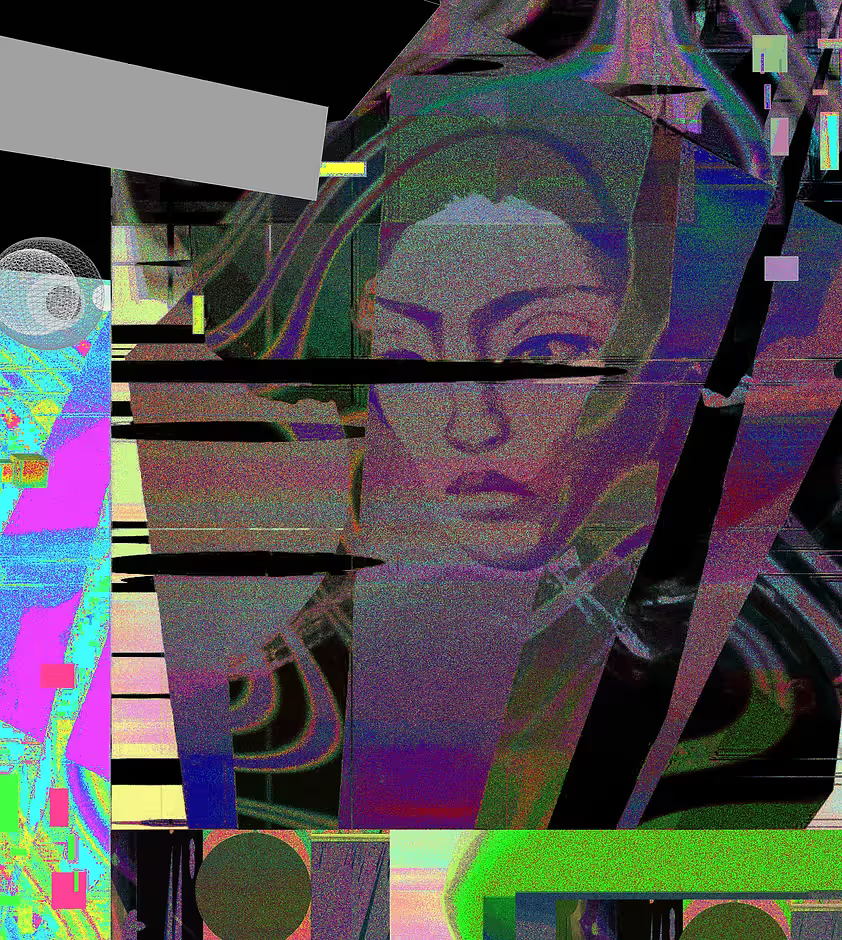
For example, in her NFT series Echoes of Eden Gen 1 she used DALL-E with JavaScript and Photoshop to create futuristic fantastical figures inspired by the colors of Caribbean Carnival and Romanian textiles.
In a later iteration of the project she used Touch Designer, a visual programming software that lets artists build real-time interactive graphics without traditional coding, to animate the images. By building a node algorithm, she managed to make the pixels of the human figures ripple, creating waterlike animations, which served as a metaphor for the spiritual connection to water in Caribbean culture. On a meta level, Echoes of Eden reflects her posthumanistic vision where technology and nature form two halves of the same whole.
Video Games: Worlds Built for Belonging
A gamer at heart, the fantasy archetypes Nygilia created in the Garden of Eden series were inspired by The Legend of Zelda, a video game she grew up with. “I loved how it brings identity and different cultures together for a greater purpose, and bridges all of them into a shared, creative experience,” she says.
The different tribes in The Legend of Zelda each have their own visual identity, and fans have long drawn their own connections to real-world cultures. Nintendo designed them as fantasy characters specific enough to feel culturally textured, but open enough that people from many different backgrounds can find a point of connection.
“I took that idea and applied it to my own practice, drawing from my experiences of being raised by my German grandmother and Italian grandfather for most of my childhood and combining them with the diaspora experience from my dad when he would tell me about Jamaica. I take all these aspects from my past and bring them into my art; whether it’s colors, shapes, scenes, or character design. And I only gained that understanding because I played those video games. It taught me that, when you bridge cultures, you can create a sense of belonging.”
This is also something she observes in her 11-year-old brother. “When he plays video games, he always chooses a character that looks like him,” she says. Through her brother, Nygilia has a direct connection to a young generation that wants to see themselves represented in those spaces; not just in games, but in the new media art field as well. “The more we push ourselves into spaces where we think we don’t belong, the more we create belonging and thrive.”


