


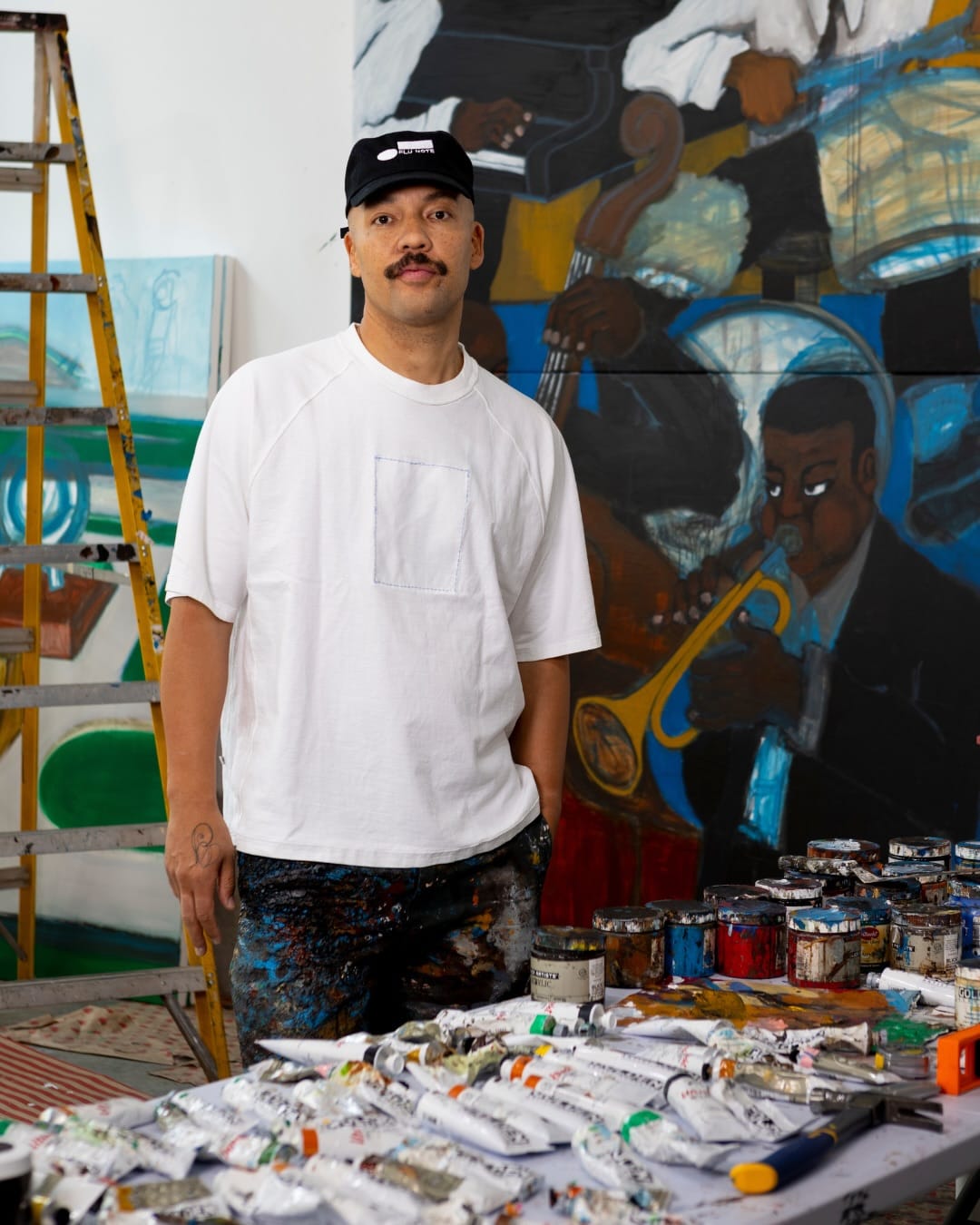
In a raw 2,600-square-foot retail space in San Francisco's Tenderloin district, painter Alvin Armstrong has set up his studio. The Brooklyn-based artist is in the city for a five-week residency at the invitation of art dealer Jonathan Carver Moore. He's already the fifth artist to participate in the gallerist’s program.
The painter is known for creating dynamic large-scale pieces that often spread over two canvases, depicting influential Black figures, from Angela Davis to Michael Jordan, and his own interpretation of the Black experience. His new body of work will debut in a solo exhibition at Jonathan Carver Moore, opening in February 2026 in celebration of Black History Month.
Moore started the residency in 2024, when he approached his landlord, the designer and developer Joy Ou, with a proposal of hosting an artist residency in the vacant storefront next to his gallery. She liked the idea and the two hopped on a "Let's-do-this" Zoom call with Michelle Mansour, former director of non-profit Root Division, who helped Moore structure a budget.
Just three months later, he welcomed his first artist in residence, the Ghanaian painter Aplerh-Doku Borlabi, known for his figurative oil paintings and unique use of coconut sheath.
Making the creative process visible
For the project, Moore drew inspiration from collector Danny First, who runs a similar program in Los Angeles called "The Cabin." First invites artists for residencies and exhibits their finished pieces in a cabin in his backyard. "I visited him a couple of times and thought this would be a perfect program for the gallery. Collectors can see what the artist is working on in real time without any pressure, and have conversations with them along the way," he explains. "I think it's important to make the creative process visible."
It's an accessible approach that works. He has built relationships between artists and collectors that go beyond the transactional, fostering a community around art. This focus on dialogue, community, and culture stands in contrast to a broader art-world trend that many critics now question. The art world has focused too much on art as an investment and too little on its cultural and social capital. As art strategist Marc Spiegler put it in a recent podcast episode with Artnet News: Positioning art as a financial investment has "scared away a lot of great collectors." He notes that these people "thought they were getting into a discussion about culture" but instead found themselves at dinner tables where collectors were talking about auction results and ROI.
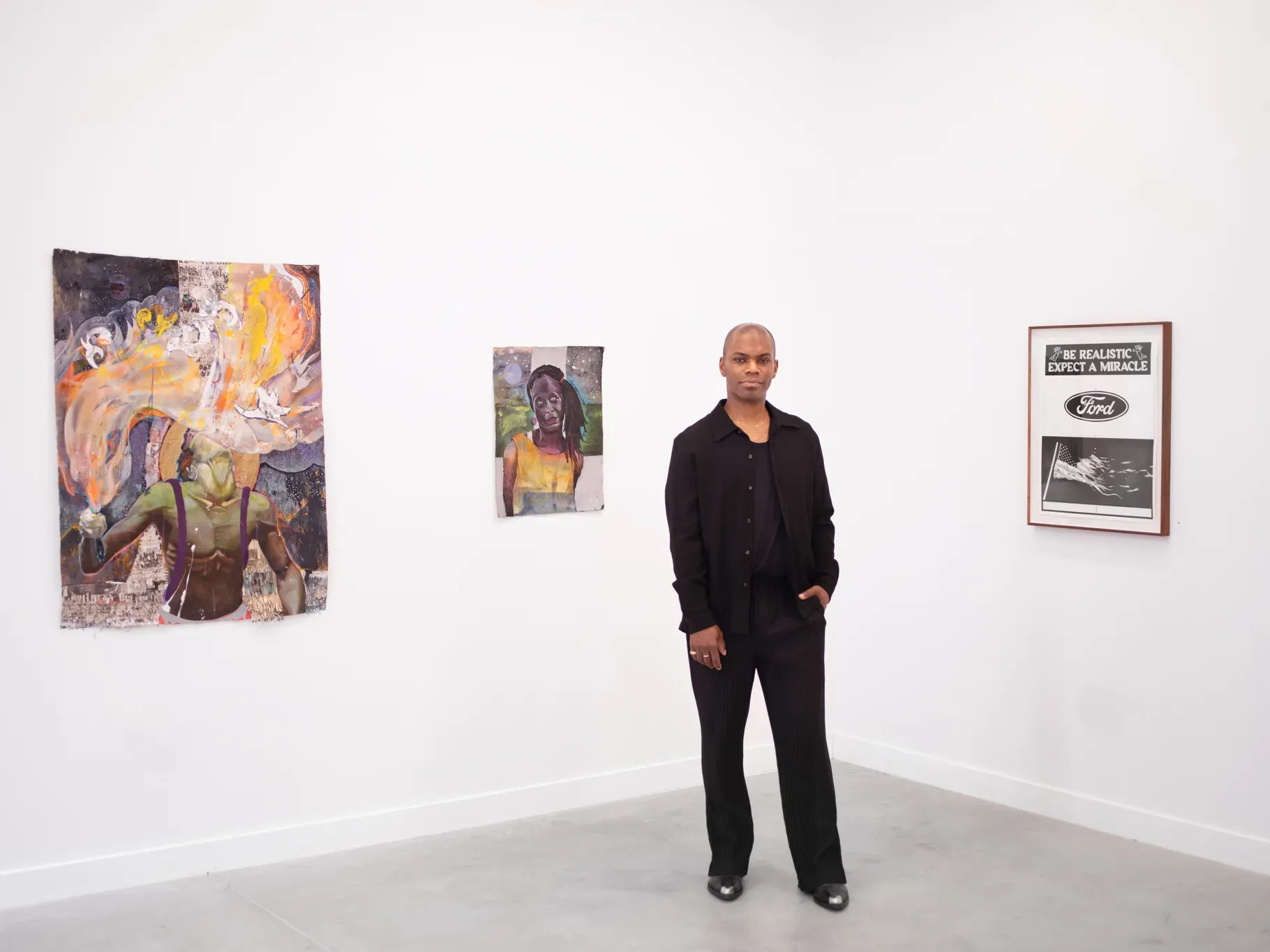
"For a long time, the art world has operated too exclusively, relying on a small group of people to carry it," says Moore. "So when I'm thinking about community building, I'm addressing the new collector, someone who may never have stepped foot into a gallery before, and who might be intimidated because they don't know what questions to ask or fear they don't know the "right" art-world terminology."
Moore knows what it's like to feel excluded from the art world. Although he'd always loved art, it wasn't until a transformative experience at the Ottawa Art Gallery in Canada, that he really connected deeply with a work of art. He recalls the photographs of acclaimed South African artist Zanele Muholi, who documents the lives of South Africa's Black lesbian, gay, trans, queer and intersex communities. For Moore it was the first time that he saw his lived experiences as a Black, gay man mirrored in a museum context.
When he returned home, he launched a digital journal featuring the creatives in his community. Every week he would zigzag through San Francisco, visiting studios, galleries, and museums to learn everything he could. After getting to know the artists and their stories, he advocated for their work at galleries trying to land them a representation, but no one was interested. That's when the thought of launching his own gallery became louder and louder. However, it didn't scream at him until 2020.
He first pursued a career in communications at a nonprofit working in criminal justice reform. After four years, Moore finally entered the art world professionally as the Director of Donor Relations, Partnerships & Programming at the Institute of Contemporary Art in San Francisco. Then George Floyd was murdered, sparking the largest racial justice protests in the United States and beyond since the Civil Rights Movement.al
The art market reacted. Collectors and galleries championed Black art in their programming throughout the country. But Moore noticed there weren't many Black gallerists, sales directors or curators in those spaces.
For Moore diversity is not only about whose art is on the wall but about who makes the decisions in the room. At the heart of diversity lies a simple question: who gets to decide what culture matters, and whose stories get told?
"There weren't any people at those galleries who looked like the artists whose pieces were displayed. That's when I realized I wanted to fill this void," he remembers. "As a Black gay man, I can relate to the artists' experiences. I can have conversations around the artworks and tell their stories authentically. They don't need to explain anything to me, I just get it."
"You can learn so much from art, if you have the context. It has a great way of addressing social issues without being in your face, and I think that is something we should leverage more," he says. "We have given cultural institutions so much power when it comes to museum collections and who gets validation in the art world. Of course, we love our museums and institutions, but we can also rent out spaces and do our own shows with the artists we want to see," he says.
Moore's approach echoes a long tradition in art history. The Impressionists showed in Nadar's photography studio after being rejected by the Salon de Paris. Peggy Guggenheim launched Jackson Pollock from her small townhouse gallery. As art critic Jerry Saltz puts it, these are 'the rooms of quiet revolutions, the indispensable labs of art history.' Moore's Tenderloin space is the latest edition in that lineage.
